

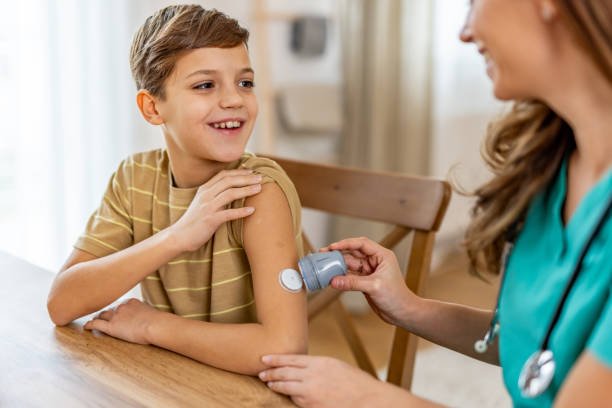

Mobile glucose monitors offer glucose level insights without the need to prick one’s skin, allowing even more health conscious individuals to realize how certain foods, physical activities, sleep, stress, etc. affect one’s glucose metabolism. In the United States, 2025, the best wearable glucose monitor options will entail trade-offs in regulatory clearance, price, usability, wear-time, and most importantly, accuracy. The following article will feature the foremost glucose monitors, best monitor specifications, legal pros and cons, and the best overall monitor for your needs in an SEO optimized manner.
Why are wearable glucose monitors important and useful?
Instead of offering only sporadic finger prick glucose level insights, wearable monitors, within 5-15 minutes, offer real-time glucose snapshots, thus allowing management of blood sugar without delays. For instance, the leading monitors remin glucose readings every minute.
Instead of only offering glucose level insights, wearable monitors offer day-to-day insights and fluctuations over more than a 24 hour period. For example, one can realize the difference in fluctuations and levels during the day, and more importantly, how levels rise after meals, drop during sleep, and even adjust for physical activities.
Wearable monitors provide actionable insights within critical time periods for individuals with diabetes, thus offering more dynamic battery life in these cases, making the monitors life-changing.
Wearable monitors offer proactive insights on best sugar levels and lifestyles to diabetes, with the ability to adjust and monitor for carbs, sleep, stress, and exercise.
Enhancing integration with digital health: The majority of wearable devices are compatible with smartphone applications, sync data with healthcare professionals, and are part of comprehensive healthcare systems.
Nonetheless, one should be mindful of the following: Smartwatches and rings claiming to measure glucose levels without invasive methods are still not approved by the U.S. Food & Drug Administration (FDA) and probably won’t be reliable. (Verywell Health).
What Should You Focus on Over the 2025 Horizon?
With the wearable glucose monitors in the U.S. market, focus on the following features:
Regulatory clearance / accuracy – The presence of clinical studies supporting a device’s accuracy, along with lower MARD (Mean Absolute Relative Difference) values, indicates improved accuracy (National Council on Aging).
Wear-time & replacement interval – How long are you able to keep a sensor on before it is replaced? Some last 10–15 days, while others endure for months (T1D Strong).
Sensor size & comfort – The more compact the sensor, the better, as lower intrusion levels are more comfortable for continuous wear (Type Strong).
App & device integration – Does the device communicate with your mobile phone and smartwatch? Can it be integrated into health data systems? Can alerts be customized?
Cost & insurance coverage – Comptes to the sensors and transmitters are vital for you to determine insurance coverage to avoid out-of-pocket costs (Trend Path).
User suitability – Are you monitoring your glucose levels to manage Type 1 or Type 2 diabetes, or does the device serve general metabolic monitoring? The best device for one use may differ for another.
Advanced functionality and insight analytics are useful features where a device can extend its functionality and provide analytics beyond raw numbers.
Devices and account interfaces require support and systemic care continuity in provision and maintenance over time.
Glucose Monitors in the US Wearable Top 2025
These consist of devices described in positive focus in 2025 and useful for glucose monitoring in the age of wearables.
For ease of use and G7. Dexcom Strong T1D Correct, serviceable and great, wearable glucose device on the market.
Abbots Libre 3 Flexible unit, budget device with compact sensors and retention on no finger stick testing. Easily reduces no contact testing.
Senseonics Eversense, 365 is useful for long term with ease of retention on implantable devices.
G7 Dexcom
Marketing, ease of use, and diabetic combination of devices with advanced features are achievable.
In some customs, the G7 is on the market for 2023 with a 15 day wear time.
Pros 5. G7 is a leading, recommended with a small, compact sensor.
In market reference. No finger G7 designed with and for diabetic contact is testing!
High-end models might offer less sophisticated alerts and integrations, but, compared to Senseonics Eversense 365, this may be inconsequential. The Eversense 365, unlike other models, has an implantable sensor that can be used continuously for 365 days, making it worthwhile for long-term users.
Pros: Sensors can be worn for longer periods, and users will have less frequent sensor changes.
Cons: The sensor will require a minor surgical procedure for implantation, and it has a higher upfront cost than other glucose monitors.
People with Type 1 or Type 2 diabetes who require constant monitoring and need real-time feedback would benefit most.
People who are pre-diabetic or have metabolic health concerns and wish to track glucose levels influenced by food, exercise, or sleep as well as sleep patterns would benefit most from these devices. Although medical guidance of a lower grade would still be most optimal.
People who monitor glucose spikes to optimize their biohacking or to improve their active lifestyle would also benefit. In these cases, however, they must use caution when determining accuracy and when interpreting results.
Limitations & Important Warnings Unapproved Claims No wristwatches or rings have been approved by the FDA for glucose monitoring, and this technology may pose significant risks. (Verywell Health)
Comment on Accuracy Some users bottom casemates dessous skin. Accuracy depends on proper placement and sensor adhesion, and if applicable, calibration.
Cost & Coverage Sensors and other wearables may fall into supplemental coverage. Certain diabetes management supplies and the associated insurance coverage, especially for non-diabetic scenarios, can lead to significant cost discrepancies.
Clinical Oversight Required Clinical Oversight Required. Wearables are not a substitute for professional advice. They are to only be used under professional supervision if you’re managing the risk of diabetes or hypoglycemia.
Performance Sensor wear-time and adhesion are sometimes overlooked. With the finest models, some users still report problems with lifting, skin irritation, or hyperhidrosis during workouts. (Type Strong)
Choosing a Monitor Here’s a checklist to consider:
Is the intended purpose diabetes management (a prescription will probably be needed) or metabolic tracking (most likely OTC)?
What are your cost considerations? For the intended use, consider the costs of the sensors, transmitters, and their replacements for cost intervals.
How often would you like to have new sensors? If you prefer less frequent replacements, you might like Eversense’s lower frequency replacements.
Do you have a smartphone or smartwatch and want to have detailed app integrations?
What alerts and levels of data detail are you looking for? Do you want a simple trend overview or sophisticated analysis?
Does your insurance cover the device, or the requisite supplies?
Are you okay with installation (arm patch) or a minor surgical procedure (implant) of the device?
How long are you willing to wear a sensor for, and how comfortable are you with wearing a sensor continuously for a 24 hour period?
Practical Tips for Use & Maintenance
Follow the instructions for sensor placement to the letter: intended for the arm, clean and dry skin, and avoid placement in areas of the body that will rub together.
It is also advisable to keep spare sensors and transmitters, as sensors do fail and the adhesive can lift.
Always remember to sync the app regularly and check the trends, not just single values.
If your provider manages your diabetes, you can share your data with them.
Use alerts strategically: set the high and low thresholds to appropriate levels per your objectives and in-line with your medical advice.
Glucose levels can be impacted by your lifestyle and data monitors work best when you incorporate holistic data.
The Future of Wearable Glucose Monitoring
Current advances in technology seek to incorporate truly non-invasive glucose monitors (invading no skin) into everyday use. For instance, researchers are looking into the potential of sweat sensing glucose monitors, optical glucose monitoring, and AI glucose predictive algorithms. (arXive) However, as of 2025, these are not yet FDA licensed for clinical use and so should be approached with care. Also:
As adoption increases, device prices are expected to fall and competition increases. (Trend Path)
The merger of AI with lifestyle analytics brings predictive analytics for glucose monitoring and analysis on stress and sleep.
The combination of hybrid decision making (wearable + clinical) along with improved data sharing, clinician remote monitoring, and hybrid decision-making are the next likely advancements.
Conclusion
In 2025, the smartest and safest route to take for the best glucose monitor watches in the U.S. starts from FDA-cleared CGMs such as Dexcom G7, Abbott FreeStyle Libre 3, or Senseonics Eversense 365. These monitors provide invaluable integration into your health system, along with glucose monitoring and tracking trends.
Take into account: precision, usage duration, expenses, and your individual circumstances. Glucose monitoring wearables are effective devices for real-time monitoring of glucose levels, but only within the context of other components of metabolic and overall health management. They do not substitute for medical guidance but offer valuable real-time information on glucose management to assist users in optimizing their dietary, physical, mental, and sleep health.
For Americans aiming to improve controllers of their metabolic health, experience fewer blood sugar variability, and implement positive changes in their overall lifestyle—2025 may be the year wearable devices transform into real-time metabolic coaches for users